

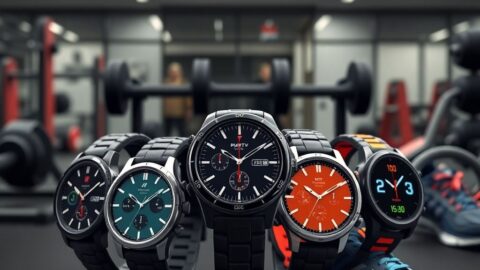
In recent years, sports watches have become an essential accessory for fitness enthusiasts and professional athletes alike. Thanks to technological advancements, these gadgets offer not only timing but also a multitude of features to enhance your workouts. In this guide, we break down the 10 best sports watches on the market, examining their features, strengths, weaknesses, and what sets them apart.
At the top of our list is the Garmin Forerunner 945, a favorite among many serious athletes. Renowned for its GPS accuracy and numerous health-tracking features, the Forerunner 945 is designed for those who want to monitor their training performance. It offers VO2 max estimates, a pulse oximeter, and even built-in music storage. However, its price of around $599 may be considered high for casual users. Nevertheless, Garmin offers a one-year warranty, providing some reassurance in case of defects or malfunctions.
The Suunto 9 Baro, priced at $499, is another strong contender. This watch boasts impressive battery life, lasting up to 120 hours with GPS enabled. Its robustness matches its ability to withstand extreme conditions, making it ideal for the most demanding outdoor adventures. Its somewhat bulky design, which some might find cumbersome, is a slight drawback. Suunto's generous two-year warranty demonstrates the brand's confidence in the product's durability.
For those seeking a smartwatch with fitness features and a sleek design, the Apple Watch Series 7 is an excellent option. Starting at $399, it integrates seamlessly into the Apple ecosystem and offers features such as an ECG app, blood oxygen tracking, and activity tracking that encourages users to close their rings. Its main drawback is its relatively short battery life of approximately 18 hours. However, Apple offers a one-year limited warranty, which can be extended with AppleCare.
The Polar Vantage V2 stands out thanks to its Polar Precision Prime sensor technology, and sells for around $499. It records data such as running power from the wrist, a unique feature among its competitors. While the triathlon features of this watch are highly praised, its user interface may seem complex for beginners. The two-year Polar warranty covers manufacturing defects, thus reassuring buyers.
The Fitbit Charge 5 is a popular entry-level choice. Priced at $179, it offers comprehensive fitness tracking, including heart rate monitoring, sleep tracking, stress level monitoring, and even electrodermal activity tracking. While not designed for serious athletes, its affordable price and attractive design make it ideal for occasional exercise. Fitbit offers a one-year limited warranty, adding value to the purchase.
The COROS APEX Pro is renowned for its multisport tracking capabilities. Priced around $499, it offers features such as 24/7 heart rate monitoring and preloaded topographic maps. COROS is praised for its excellent battery life, up to 40 hours in full GPS mode. However, navigation may be less intuitive for those unfamiliar with the COROS user interface. The watch comes with a two-year warranty.
The Samsung Galaxy Watch 4 combines activity tracking with smartphone features, starting at $249. It's equipped with new bioactive sensors and supports a wide range of fitness apps. While its battery life isn't exceptional (around 40 hours), its sleek design and features make it a strong contender. Samsung offers a one-year limited warranty with extension options.
Another notable new release is the Withings Steel HR Sport, priced at $199. This hybrid smartwatch offers heart rate tracking, GPS navigation, and a classic design. Its battery life of up to 25 days makes it a practical choice for travelers. However, its limited music storage and smart features compared to other models in the same price range could be a drawback. The Steel HR Sport comes with a two-year warranty.
The TicWatch Pro 3, priced around $299, uses Qualcomm's Snapdragon Wear 4100 processor, ensuring smooth performance and extended battery life of up to 72 hours in smartwatch mode. It includes health tracking tools such as a blood oxygen saturation monitor, sleep tracker, and stress monitor. However, it's not as rugged as some other dedicated sports watches, limiting its use in extreme sports environments. TicWatch offers a two-year warranty.
Finally, for those on a budget, the Amazfit Bip U Pro offers a wealth of features for just $69. It includes blood oxygen measurement, built-in GPS, and over 60 sports modes. While it doesn't compare to high-end models in terms of build quality and features, it's an excellent entry-level watch for fitness tracking. Amazfit offers a one-year limited warranty.
With technological advancements, sports watches are becoming much more than just accessories. They serve as personal trainers and health monitors, providing information and motivation to keep moving. While personal preferences play a significant role in the selection process, understanding the technical specifications and limitations of each watch can greatly enhance the training experience. Therefore, when choosing a sports watch, it's crucial to find the right balance between your needs, budget, and the warranty offered to ensure you get the watch best suited to your fitness journey.
John Clark, a renowned sports analyst, points out: “With the rapid evolution of wearable technology, choosing the right sports watch isn't just about having the most features, but rather about adapting it to your individual training needs.” His analysis highlights the importance of technological customization, a crucial criterion given the multitude of features available on different models. Experts advise taking a step back to assess your specific needs before making a purchase.
Historically, the concept of the sports watch emerged with the development of timing devices for sporting events in the early 20th century. Chronometers laid the foundation for what would become more complex devices. Athletes like Roger Bannister, who broke the four-minute barrier for the mile in 1954, placed great importance on the accuracy of timing, which sparked interest in portable and reliable chronometers.
Today's sports watches offer much more than just timing. For example, they incorporate GPS systems that accurately track your running route. This technology originated in military applications in the 1970s, proving that innovations can find new life in the consumer market. Whether you're running marathons or training indoors, GPS is an essential feature for those who take data analysis seriously.
When comparing prices, buyers should consider the value offered. More expensive doesn't necessarily mean better for everyone, a point echoed by fitness coach and tech enthusiast Kelly Jenkins. She advises, "A good sports watch should be tailored to your training goals. For example, if you run in the city, a model with accurate GPS and a heart rate monitor will be more relevant than rugged outdoor features." Jenkins suggests focusing on specific metrics that influence personal performance.
Despite the vast selection, consumer reviews often highlight remarkable common features, with battery life being a major concern. A long-lasting battery can make all the difference during extended workouts or competitions. Durability is also an important criterion, especially in harsh environments. A rugged watch, designed to withstand shocks and harsh conditions, offers users peace of mind and serves as a reliable companion on their fitness journey.
Some models are also exploring the realm of health beyond physical fitness, continuing to innovate with features that monitor stress, sleep, and even guide breathing exercises—proof of technological adaptability to improve mental well-being as much as physical health. According to psychologist and technologist Dr. Emily Chua, “Tracking mental health indicators with sports watches opens new avenues for understanding personal well-being and integrating mind-body fitness routines.”
Investing in a sports watch encourages us to combine technology and practicality. The way its integration into our daily lives transforms our approach to fitness is constantly evolving. The versatility of modern sports watches allows for a multidimensional approach to training, perfectly bridging the gap between performance tracking and everyday convenience.
Considered an integral part of the broader category of wearable technology, sports watches reflect a wider trend toward personalized fitness ecosystems. Equipped with features specifically tailored to the user's lifestyle, they help democratize health and fitness knowledge—a theme explored in discussions about how technology can improve personal and collective health.
Ultimately, choosing the ideal sports watch depends on your fitness goals and lifestyle. While this guide presents a wide range of options, it's essential to test different models in person whenever possible. Comfort, design, and user interface also determine overall satisfaction, hence the importance of trying before you buy, whenever feasible. Sports watches continue to evolve and promise to offer increasingly personalized and in-depth analyses of our fitness journeys.